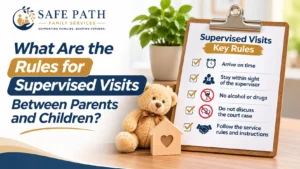

Supervised visitation is when a child spends time with a parent or other family member while a trained person is present to keep the child safe. It is usually required when there are genuine safety concerns, such as family violence, substance misuse or a long gap in contact. Courts and parents in Victoria often use supervised contact centres Melbourne offer so a child can keep a relationship with a parent in a safe, structured setting.
Key Takeaways
- Supervised visitation means a third person watches the visit to protect the child.
- It is usually used when there are safety, wellbeing or relationship concerns.
- It can be agreed between parents or ordered by a court.
- It is often a short or medium term step, not always permanent.
- Professional services provide neutral, trained supervision and a controlled environment.
- The child’s best interests and safety guide every decision.
What Is Supervised Visitation?
Supervised visitation lets a child see a parent, grandparent or another important person while an approved supervisor is present. The supervisor watches the visit, steps in if there is a safety issue and may record what happens.
In Australian family law you will often hear the terms “supervised time” or “supervised contact” instead. They mean the same thing in practice. The goal is to protect the child while keeping a meaningful relationship alive where it is safe to do so.
The main law is the Family Law Act 1975. It sets out that the best interests of the child are the court’s main concern, and protecting children from harm carries significant weight.
When Is Supervised Visitation Required?
There is no single rule. Each case depends on the child’s age, the level of risk and the history of the family. These are common reasons.
Family Violence or Abuse
If there has been family violence, a court may decide that unsupervised time is not safe yet. Supervision allows contact to continue while the risk is managed.
Drug or Alcohol Concerns
When a parent has a history of substance misuse, supervision can reduce the risk of harm. It can also help a parent show progress over time.
Mental Health Concerns
If a parent is unwell and not yet stable, supervised visits may help keep the child safe. This does not mean the parent is a bad parent. It means extra support may be needed for a period.
A Long Gap in Contact
If a child has not seen a parent for a long time, supervised visits can offer a gentle restart. A young child may feel anxious around someone who feels unfamiliar, and a trained supervisor can help the visit go smoothly.
Concerns About Taking a Child Away
If there is a risk a parent might not return the child, supervised visits in a controlled setting can reduce that risk while the court looks at the case.
Who Decides That a Visit Must Be Supervised?
Supervision can be set up in two main ways.
By agreement. Parents may agree to supervised time in a parenting plan or through mediation. Family dispute resolution services can help.
By court order. A judicial officer can order supervised time and name where it must happen or who may supervise. The order will often say how long it lasts and when it will be reviewed.
If you are unsure what applies to your case, speak with a family lawyer. Victoria Legal Aid also provides legal information for people in Victoria.
What Is the Difference Between Supervised Visits and Supervised Changeovers?
They are often confused, but they are different.
A supervised visit means a supervisor is present for the whole time the child spends with the parent.
A supervised changeover means the child is handed from one parent to the other with a trained person present, but the parent then spends unsupervised time with the child. This is often used where parents should not meet in person because of conflict or safety concerns.
Both can be ordered by a court, and some families use both at different stages.
Where Does Supervised Visitation Take Place?
Visits can happen at home with a trusted adult, in a public place or in a professional venue. For many families, a purpose built service is the safest and most neutral option.
A children’s contact centre Melbourne families can access provides child friendly rooms, trained staff and clear rules. Parents usually arrive at different times and use separate entrances, so they do not need to meet.
This is helpful when emotions are high or when there has been conflict. It also means the child can focus on enjoying the time rather than feeling caught in the middle.
You can find general information about these services through Family Relationships Online, which is an Australian Government resource for separated and separating families.
How Does the Process Work?
Each provider has its own steps, but most follow a similar pattern.
- A referral is made by a parent, lawyer or the court
- Each parent has a separate intake interview
- The service explains the rules and what to expect
- The child may visit the centre in advance to feel comfortable
- Supervised visits or changeovers begin on agreed days
- Staff write notes about each session
When you choose a child contact centre Melbourne parents can rely on, ask about their experience, staff training and how they handle emergencies. Also ask whether their notes can be used in court if needed.
Can a Family Member or Friend Supervise?
Sometimes. Parents may agree on a trusted relative or friend, and the court may accept this if it believes the person is suitable.
However, informal supervision can be harder. The supervisor may feel torn between loyalties or may not feel confident stepping in. A professional service is neutral and trained to act if there is a problem.
If an order names a specific supervisor or service, you must follow it. Breaching a court order can have serious consequences.
What Rules Apply During Supervised Visits?
Rules vary, but common ones include these:
- The visit must happen at the agreed time and place
- The supervisor stays within sight and hearing of the child
- No alcohol or drugs may be used
- Parents must not discuss the court case with the child
- Parents must not question the child about the other parent
- Gifts or outings may need approval first
The supervisor can end the visit early if the child is distressed or if the rules are broken.
How Can Parents Make Supervised Visits Work?
A few simple habits can help visits go well.
Be on time. Reliable attendance helps a child feel secure.
Keep it child focused. Plan simple activities such as drawing, board games or reading.
Stay calm. Children notice tension quickly, so keep your tone warm and relaxed.
Follow the rules. Consistent behaviour can show the court that you are putting your child first.
Be patient. Trust and comfort can take time, especially after a long break.
How Long Does Supervised Visitation Last?
It depends on the case. Some families need it for a few months while safety concerns are addressed. Others need it for longer.
Courts often review orders over time. If a parent shows positive change and the child feels safe, contact may step up to unsupervised time. The pace is decided by the child’s needs, not by the parent’s wishes.
Who Pays for Supervised Contact Services?
Costs and availability depend on the provider. Some services are government funded, while private providers may charge fees. Waiting times can vary as well.
Ask about fees, wait times and eligibility before you commit. Your lawyer can also advise what the court expects in your situation. For a closer look at how the courts handle parenting matters, visit the Federal Circuit and Family Court of Australia.
Conclusion
Supervised visitation exists to keep children safe while helping them maintain important family relationships. It is used when there are real concerns, and it is often a stepping stone rather than a final outcome.
If you need a safe, neutral place for contact, speak with your lawyer and explore supervised contact centres Melbourne families trust. A reliable children’s contact centre Melbourne offers can help your child feel secure, and a professional child contact centre Melbourne providers operate can give everyone clarity about what happens next. This article is general information only and is not legal advice.
Frequently Asked Questions
What does supervised visitation mean in Australia?
It means a child spends time with a parent or relative while a trained person watches to keep the child safe. It may be agreed by parents or ordered by a court.
Does supervised visitation mean I am a bad parent?
No. It usually means safety concerns or a long gap in contact need to be managed. Many parents move to unsupervised time once those concerns are addressed.
Can supervised visits become unsupervised?
Yes, in many cases. Courts and services look at how the visits are going, how the child feels and whether risks have reduced before changing arrangements.
Who can supervise a visit?
A trained professional at a contact service is the most common choice. A trusted relative or friend can sometimes supervise if the other parent agrees or the court approves.
Can a child refuse a supervised visit?
Children’s feelings matter, but a court order must still be followed. If a child is distressed, speak with the service or your lawyer about next steps.