
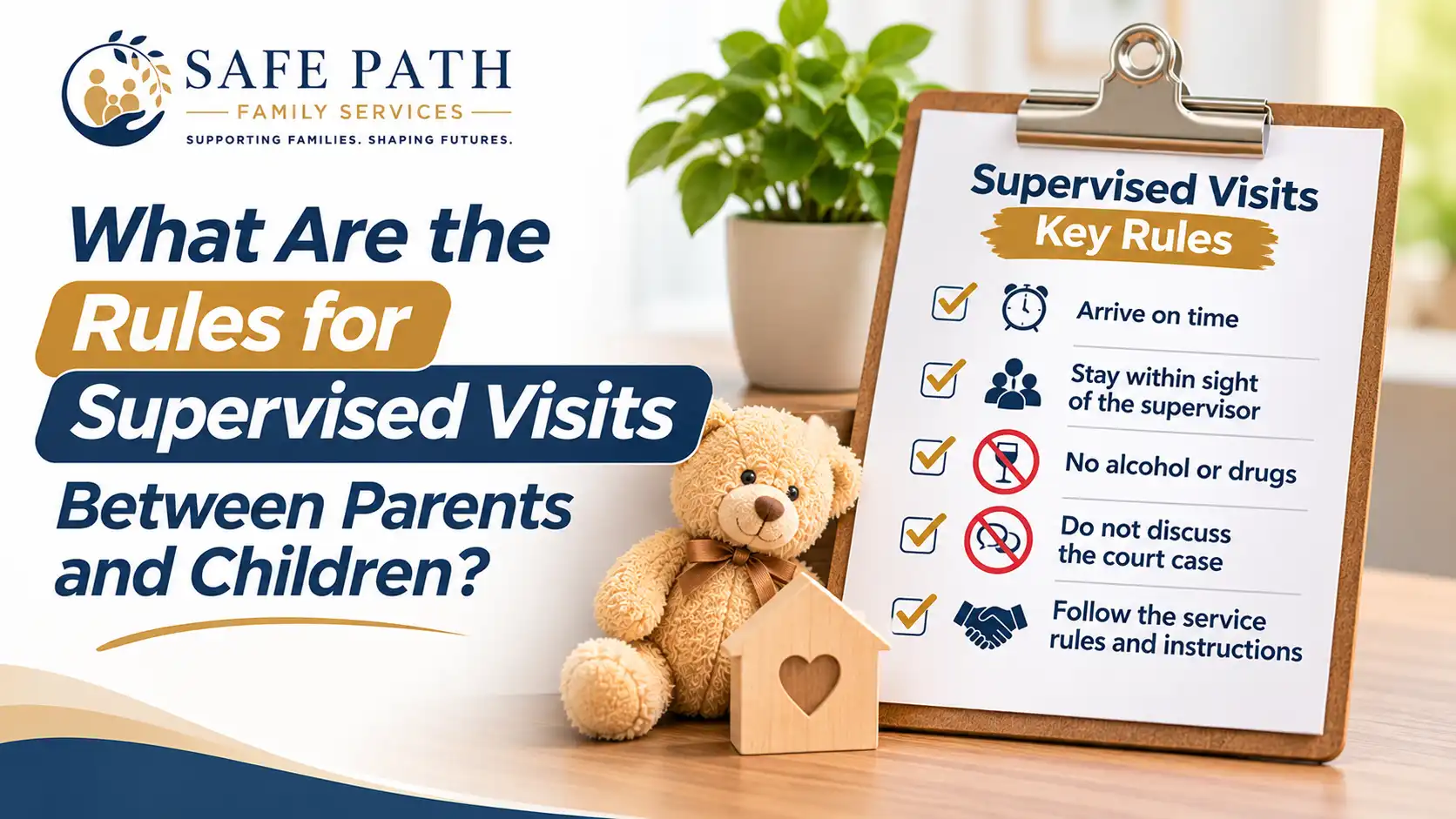
The rules for supervised visits are set by a court order, a parenting agreement and the service or supervisor running the visit. Most rules cover arriving on time, staying within sight and hearing of the supervisor, avoiding alcohol and drugs, and not discussing the court case with your child. Many families follow these rules at supervised contact centres Melbourne offers, where staff keep each session safe, calm and neutral.
Key Takeaways
- The rules come from three places: the court order, the parenting agreement and the service.
- A court order must always be followed exactly.
- Common rules include punctuality, no alcohol or drugs and no questioning the child.
- Supervisors can end a visit early if the child is distressed or rules are broken.
- Notes from visits may be used by lawyers or the court.
- Following the rules shows a parent is putting the child first.
Who Sets the Rules for Supervised Visits?
There is no single national rulebook. The rules depend on how the supervision was arranged.
The court order. If a judicial officer ordered supervised time, the order will state where, when and how often visits happen. It may also name the service or supervisor. These terms are legally binding.
The parenting agreement. Parents sometimes agree on supervised time through mediation or a parenting plan. The agreement can include extra rules, such as handover times or who may attend.
The service or supervisor. A professional provider will have its own policies on behaviour, safety and record keeping. You will usually be asked to agree to these before the first visit.
Where rules overlap, the court order always comes first. If you are unsure what applies to you, ask a family lawyer. Victoria Legal Aid also provides legal information for people in Victoria.
What Are the Common Rules for Supervised Visits?
Rules vary, but most services and orders include the same core expectations.
Arrive and Leave on Time
Parents are usually asked to arrive at a set time and leave at a set time. Services often stagger arrivals so parents do not meet.
Being late can shorten the visit or cause it to be cancelled. Reliable attendance also helps a child feel secure.
Stay Within Sight and Hearing of the Supervisor
The supervisor needs to see and hear the visit. This means no private conversations, no leaving the room with the child and no whispering.
No Alcohol or Drugs
Parents must not use alcohol or illicit drugs before or during a visit. If a parent appears affected, the visit will usually be stopped.
Do Not Discuss the Court Case
Children should not hear about legal issues, parenting disputes or adult conflict. Keep conversation light and child focused.
Do Not Question the Child About the Other Parent
Avoid asking where the child lives, what the other parent does or who is in their home. These questions can make a child feel they must pick a side.
No Promises You Cannot Keep
Saying “You will be living with me soon” may feel kind in the moment, but it can confuse and upset a child if it does not happen.
Check Before Bringing Gifts or Food
Many services ask you to check first. This helps staff manage allergies, safety and fairness.
Follow the Supervisor’s Instructions
Supervisors are trained to protect children. If they ask you to change your behaviour or pause an activity, follow the request calmly.
What Happens If the Rules Are Broken?
The consequences depend on what happened.
A minor issue might lead to a reminder or a warning. A serious breach, such as being affected by alcohol, threatening staff or trying to take the child, can lead to the visit being ended on the spot.
The service may also write a note about the incident. Lawyers or the court may later ask to see these notes. If you breach a court order, there can be legal consequences, so seek legal advice quickly if something goes wrong.
Can a Supervisor End a Visit Early?
Yes. A supervisor can stop a visit if a child is very distressed, if the parent breaks the rules or if there is a safety concern.
This is not meant as punishment. It is a way to protect the child and prevent a difficult moment from becoming worse. After an early ending, talk to the service about what went wrong and how to prepare for the next session.
What Do Supervisors Record?
Most professional services keep notes about each session. These may include:
- Who attended and when they arrived
- How the child behaved and coped
- How the parent interacted with the child
- Whether the rules were followed
- Any concerns or incidents
Ask the service early whether notes can be provided to lawyers or used in court. Honest and consistent behaviour across every visit is the best way to build a positive record.
How Do Supervised Visits Link to Family Reports?
Supervised visits and family reports often appear in the same case, but they do different jobs.
A family report is a written document prepared by a qualified professional, usually a psychologist or social worker. It looks at the child’s needs, each parent’s relationship with the child and any safety concerns. Many parents work with family report writers Melbourne professionals when the court or their lawyers decide an independent assessment is needed.
A family report assessment Melbourne parents attend may look at how supervised visits have gone, especially if safety was the main concern. The report writer may read service notes, speak with the child and consider whether the current arrangement still suits the child.
This means your behaviour during supervised time can matter. Calm, warm and consistent visits give the report writer a positive picture of your parenting.
What Should You Say to a Report Writer About Supervised Visits?
Be honest, specific and child focused.
For example, instead of saying “The supervisor was unfair,” you might say “I found the first visit hard, but I have learned to keep activities simple and my daughter now settles faster.”
This shows reflection and a willingness to improve. Avoid blaming the other parent or the service. Report writers value parents who can describe their child’s experience clearly.
If you feel unsure about the process, a family report assessment Melbourne provider can explain what to expect before you meet.
Where Can Supervised Visits Take Place?
Supervised visits can happen in three main settings.
A professional contact centre. This is the most neutral option, with trained staff, child friendly rooms and clear rules.
A public place. Some orders allow visits in a park, library or cafe with a supervisor present.
A private home. A trusted adult may supervise, but only if the court or both parents agree.
Professional settings are often the safest choice when conflict or safety concerns are high. You can find general information about these services through Family Relationships Online, an Australian Government resource for separated families.
How Can Parents Follow the Rules and Make Visits Work?
A few habits make a big difference.
Prepare something simple. A picture book, a puzzle or a drawing activity works well.
Keep your tone warm. Children notice tension quickly, so stay calm and positive.
Follow your child’s lead. Do not force hugs or conversation. Let trust grow gently.
Stay away from adult topics. Keep the focus on your child’s world, such as school, hobbies and friends.
Be consistent. Attend every session, arrive on time and follow every instruction.
Ask questions early. If a rule is unclear, ask the service before the visit, not during it.
Do Supervised Visits Last Forever?
No. Many families use supervision for a limited time while concerns are addressed.
Courts often review orders. If visits go well and risks reduce, a court may allow longer visits, supervised changeovers or unsupervised time. The child’s safety and needs guide every decision.
You can learn more about how parenting matters are handled through the Federal Circuit and Family Court of Australia.
Conclusion
The rules for supervised visits exist to keep children safe and help them maintain important relationships. They come from the court order, the parenting agreement and the service, and they are designed to be fair, clear and child focused.
If you need a safe and neutral setting, speak with your lawyer and look at supervised contact centres Melbourne families can access. If your case involves a report, a trusted provider of family report writers Melbourne parents rely on can explain the process, and a family report assessment Melbourne families attend may consider how supervised time is going. This article is general information only and is not legal advice.
Frequently Asked Questions
What are the basic rules of supervised visits?
Arrive on time, stay within sight of the supervisor and avoid alcohol or drugs. Do not discuss the court case or question your child about the other parent.
Can I take my child out during a supervised visit?
Usually not, unless the order or service allows it. Supervisors need to stay with you, so outings often need prior approval.
Can I hug my child during a supervised visit?
Yes, if your child is comfortable. Let your child lead and avoid forcing affection, especially after a long gap in contact.
What happens if I miss a supervised visit?
The service may record it and ask for a reason. Repeated missed visits can affect your case, so contact the service as early as possible.
Can the supervisor give evidence in court?
Sometimes. Session notes or a supervisor’s observations may be requested by lawyers or the court. Ask your service about its policy on records and reports.