
A supervised visit at a children’s contact centre is a scheduled visit where a child spends time with a parent or family member while trained staff watch over the session. Parents arrive and leave at different times, follow clear rules and meet in a child friendly room. Families can use supervised contact centres Melbourne provides when safety concerns, conflict or a long gap in contact make normal visits unsafe or difficult.
Key Takeaways
- A trained supervisor stays with the child and parent for the whole visit.
- Parents usually arrive and leave at different times, so they do not need to meet.
- Most services begin with a referral and a separate intake interview for each parent.
- The child’s safety and comfort come before everything else.
- Staff keep notes, and these may be requested by a court or lawyer.
- Supervised visits are often a stepping stone, not a permanent arrangement.
What Is a Children’s Contact Centre?
A children’s contact centre is a purpose built service that helps separated families manage contact safely. It offers two main services: supervised visits and supervised changeovers.
The centre is neutral. Staff do not take sides, and they are not there to judge either parent. Their focus is the child’s safety and a calm experience.
Many Australian contact services are connected to the family law system. You can find general information about them through Family Relationships Online, which is an Australian Government resource for separated families.
Who Uses Supervised Visits?
Supervised visits are used when unsupervised time may not be safe or workable yet. Common reasons include:
- Family violence or abuse concerns
- Drug or alcohol concerns
- Mental health concerns
- A long gap since the child last saw the parent
- High conflict between parents
- A risk that the child may not be returned
A parent might be referred by a court, a lawyer or a family dispute resolution practitioner. Some parents also agree to supervised time voluntarily to rebuild trust.
Needing supervision does not mean you are a bad parent. It often means the situation needs extra structure for a period.
How Do Supervised Visits Work Step by Step?
Every service sets its own process, but most follow a similar path.
Step 1: Referral
A referral usually comes from a parent, a lawyer or the court. If a court order is in place, the service will ask for a copy so it knows what the order requires.
Step 2: Separate Intake Interviews
Each parent meets the service on their own. Staff explain the rules, ask about the child’s needs and discuss any safety concerns.
This is a good time to mention things like your child’s routine, allergies, favourite activities and any fears. These details help staff make the visit comfortable.
Step 3: Orientation for the Child
Many services let the child visit the centre before the first session. Seeing the rooms and meeting staff can reduce anxiety, especially for younger children.
Step 4: The First Visit
On the day, the parents arrive at different times and use separate entrances. The child is welcomed by staff and taken to the visit room.
Staff stay in the room or within sight and hearing throughout. They are there to support the visit, not to take it over.
Step 5: Ending the Session
When the visit finishes, one parent leaves first. After a gap, the other parent and child leave. This staggered approach helps avoid conflict at the door.
Step 6: Notes and Reporting
Staff usually record what happened during the visit. This might include who attended, how the child coped and whether rules were followed. Ask the service early whether these notes can be provided to a court or a lawyer.
What Happens During a Supervised Visit?
A typical visit lasts one to two hours, though this depends on the order, the child’s age and the service. The room often has toys, books, art supplies and games.
A visit might include:
- Playing games together
- Drawing or colouring
- Reading a story
- Sharing a snack, if the service allows it
- Talking about school, friends or hobbies
For example, a father who has not seen his five year old daughter for six months might begin with a short visit. He brings a picture book and a puzzle. The supervisor helps the session settle by letting the child lead the pace. Over time the visits may become longer and more relaxed.
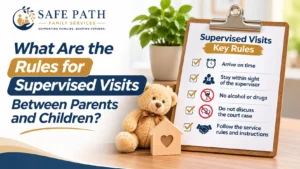
What Rules Apply at a Contact Centre?
Each service has its own rules, but these are common.
- Arrive on time and leave on time
- Do not use alcohol or drugs before or during a visit
- Do not discuss the court case with the child
- Do not question the child about the other parent
- Do not make promises you cannot keep
- Follow staff instructions at all times
- Ask before bringing gifts or food
Staff can end a visit early if a child is very distressed or if the rules are broken. This is not a punishment. It is a way to protect the child.
What Is the Difference Between Supervised Visits and Supervised Changeovers?
A supervised visit means staff are present for the whole time the child is with the parent.
A supervised changeover means staff help with the handover only. The child moves from one parent to the other at the centre, and the visit itself then happens elsewhere without supervision.
Changeovers suit families where parents should not meet in person, but the child can safely spend time with each parent. Some families begin with supervised visits and later move to changeovers as trust grows.
Where Do Supervised Visits Take Place?
Supervised visits can take place at a contact centre, in a public place or at a private home with an approved person. For many families, a professional setting is the safest and most neutral choice.
A children’s contact centre Melbourne families use is designed with children in mind. Staff are trained to manage tension, and the environment is controlled. This can help a child enjoy the time with a parent without feeling caught between two adults.
How Long Do Supervised Visits Last?
It depends on the child’s needs, the level of risk and what the order says. Some families need supervision for a few months. Others need it for longer.
Courts often review arrangements over time. If the visits go well and the concerns reduce, the court may allow more time or move to unsupervised contact. The child’s safety and wellbeing guide each step.
If you have a court order, follow it exactly. You can learn more about how parenting matters are handled through the Federal Circuit and Family Court of Australia.
How Can Parents Prepare for a Supervised Visit?
A few simple habits make a big difference.
Plan something simple. A drawing activity, a card game or a picture book works well.
Keep your tone warm. Children pick up on stress quickly, so stay relaxed and positive.
Follow your child’s lead. Do not force affection or conversation. Let them settle at their own pace.
Avoid difficult topics. Do not talk about the court case, the other parent or adult problems.
Be reliable. Turning up on time every session helps your child feel secure and shows the court you are committed.
Talk to staff. If you feel nervous or unsure, ask for guidance before the visit starts.
How Can the Other Parent Support the Process?
The parent who is not attending the visit also plays a part. They can prepare the child gently and calmly. For example, they might say, “You are going to see Dad at the centre today and the staff will be there.”
They should avoid sharing adult worries or quizzing the child afterwards. A child who feels safe and supported is more likely to cope well with the visit.
How Do You Choose the Right Service?
Not every service is the same. Before you commit, ask these questions:
- How are staff trained and supervised?
- What are the fees and waiting times?
- What happens in an emergency?
- Can session notes be used in court?
- How does the service support children with additional needs?
Look for a service that is clear, open and child focused. If you are searching for a dependable children’s contact centre Melbourne parents can trust, ask your lawyer or family dispute resolution practitioner for guidance. Victoria Legal Aid also offers legal information for people in Victoria.
Conclusion
Supervised visits at children’s contact centres give children a safe way to keep important relationships while concerns are managed. Staff set clear rules, watch over each session and help families move through a difficult period with less conflict.
If you think your family may need this kind of support, speak with your lawyer and look at supervised contact centres Melbourne parents can access. A trusted children’s contact centre Melbourne offers can make visits calmer, safer and more predictable for your child. This article is general information only and is not legal advice.
Frequently Asked Questions
What happens at a supervised visit?
A trained staff member stays with the child and parent for the whole session. The parent plays, talks or reads with the child while staff watch for safety and record notes.
Do parents meet each other at the centre?
Usually no. Services stagger arrival and departure times and often use separate entrances. This reduces conflict and helps the child feel calm.
Can I bring gifts or food to a supervised visit?
It depends on the service. Many ask you to check first, so staff know what is being brought and can make sure it suits the child.
How long does each supervised visit last?
Most visits run for about one to two hours. The length depends on the child’s age, the order and the service’s schedule.
Can supervised visits lead to unsupervised time?
Yes, in many cases. If visits go well and safety concerns reduce, a court or the parents may agree to move to unsupervised contact.